Standing Sushi Bars in Tokyo Explained: 4 Levels of Delicious Sushi
Brian M.
•
Feb 4, 2026
•
5
min read
If you're on the lookout for great standing sushi bars in Tokyo, you can find some fantastic options outside of the omakase and conveyor belt sushi spots. One of the best ways to get high-quality sushi in Japan, with quicker service and better prices than many other shops, is by visiting a standing sushi bar.

What is a Standing Sushi Bar?
Standing sushi bars are exactly what they sound like. Rather than getting a seat, you’ll actually stand at the counter and watch the sushi prepared right in front of your eyes. Why is this style popular?

Well, for starters, nigiri started as fast food in Edo, or modern day Tokyo, so this is actually a bit closer to the original way this food was eaten.
Back then, it was more of a street food than the refined sit-down experience sushi is today.

This format is also a way for shops to serve food to more people quickly and cheaply. However, not all standing sushi bars operate the same way. So here are four great standing sushi bars in Tokyo, as well as ordering and etiquette tips, ranging from straightforward to more complex ordering systems. By the end of this article, you’ll be a standing sushi bar pro.

Level 1: Tachigui Sushi Uogashi Yamaharu (Toranomon) Fast Bites, Great Catches
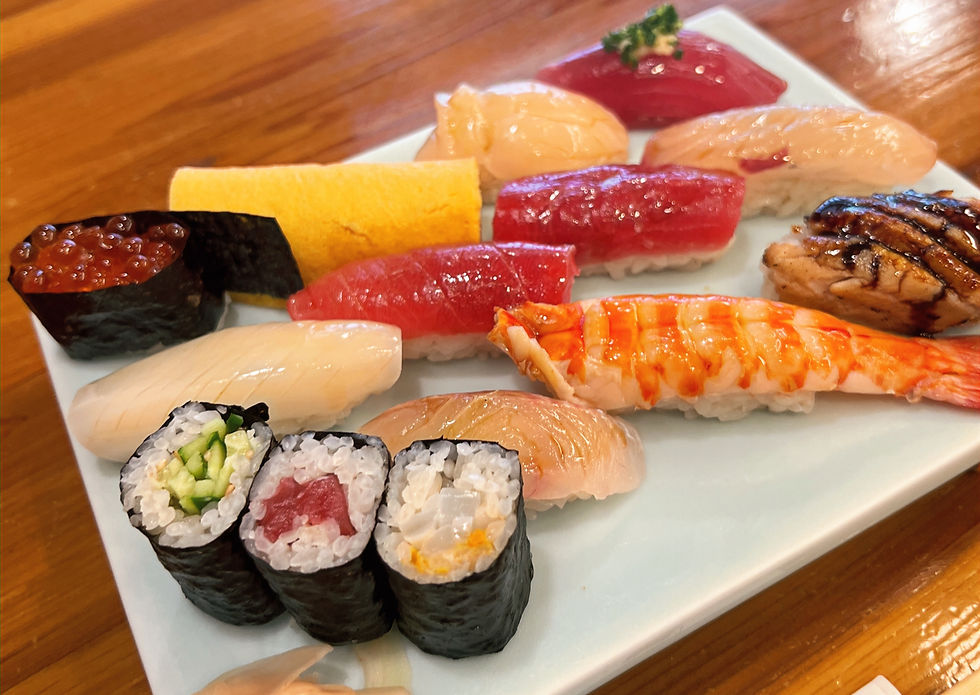
The most straightforward method of ordering sushi at a standing shop is ordering on a tablet. You’ll see this same tablet style at fast food spots all across Japan. Uogashi is backed by Yamaharu, a company that has been sourcing fresh fish for almost 70 years, and this location serves incredible bites made with fresh fish sourced daily from Yamaji. The best part? Pieces start at just 100 yen.

Tablet ordering is simple and straightforward. You can choose English at the start, and the menu is separated into sections like nigiri, hand rolls, and daily recommendations.

The daily specials are typically the freshest catches, so I highly recommend getting a couple of choices from that section. They also have a chef’s choice option if you’re indecisive. It’s a great spot for a quick bite, just make sure to avoid the lunch rush around noon!

While ordering is straightforward, finding the spot can be a bit hard if you’ve never been. On the B2 floor of the Toranomon Hills building, just head all the way back and then to the left until you see it. While you’re in the building, you can also pop up to the top floor for some great post-sushi cocktails!
Looking to experience Tokyo's hidden cocktail scene? Sign up for the Ebisu Hidden Cocktail Bar Tour.
Practical Info:
Address: Tokyo, Minato City, Toranomon, 2 Chome−6−3 ヒルズ ステーションタワ B2F
Hours: 11:00-14:30 (last order at 14:00) & 17:00-23:00 (last order at 22:00) daily.
Why go: For fast bites of great fresh catches, and friendly staff.

Level 2: Tachizushi Sushiyoko EATO LUMINE (Shinjuku) Early Breakfast Ordering
The hardest part about Tachizushi Sushiyoko may not be the ordering at all, but the fact that to find it you must go within the infamous Shinjuku Station. Although it can be a confusing station (the busiest in the world, in fact), Sushiyoko is conveniently located inside the JR Shinjuku Station gates, at EATO LUMINE, making it a convenient stop if you’re between stations or transfers.

Another great convenience of this shop is that it opens at 8:00 most days, so breakfast sushi is possible. This is rare in a city where many places, sushi and otherwise, don’t open until 10 or 11:00. The ordering method here is an order sheet. They have both English and Japanese menus, and you simply write your desired choices, with or without wasabi, and hand it to the sushi chef. If you want an even faster meal, they also have grab-and-go boxes over to the right.

Practical Info:
Address: Tokyo, Shinjuku City, Shinjuku, 3 Chome−38−2 イイトルミネ新宿
Hours: 8:00-23:00 daily.
Why go: For great deals on fresh sushi in the middle of commuting or traveling.

Level 3: Magurobito Okachimachi Shutchojo (Ueno)
Magurobito operates a handful of sushi shops around Tokyo, but the Okachimachi branch is probably the best and most accessible option if you’re in the mood for a quick bite. Sitting in the heart of the lively Ameyoko Shopping Street, this is a fantastic place for a fast, delicious, and affordable Edo-style sushi experience.

However, you don’t get to fall back on tablets or order sheets here. To order, you have to ask the chef. There is an English menu at this branch, but sometimes calling out and ordering can still be an intimidating experience, especially if it’s your first time in Japan.

One good fallback option if you can’t decide is to simply ask for the chef’s recommendation, or “osusume” in Japanese. Ameyoko is also a great area to explore further if you’re into discount shopping, izakayas, or ramen.

Practical Info:
Address: Tokyo, Taito City, Ueno, 6 Chome−3-7
Hours: 11:30–22:00 daily.
Why go: For a quick stop in a busy area, with local energy and fantastic tuna.
Level 4: Sushi Senmon Store Kadohei (Shimbashi)
Kadohei has, without a doubt, the most complex system for ordering sushi on this list, and one of the more unusual methods in the city, especially for first timers.
However, what this shop lacks in straightforwardness, it more than makes up for in incredible flavor and affordability. Their Shinbashi branch is its newest location, and can get quite long lines despite the spacious (for Tokyo) interior.

When you walk in, your first stop is the ticketing machine. You won’t actually buy the sushi itself here, but tickets that you add up to the amounts that align with the menu items you want. Their menu is in Japanese around the store, and they also have a QR to their Instagram with their daily menu. You can use a translation app easily here.

On the ticket, you will write your name and order. For example, if tuna is ¥400 and you have two 200 tickets, you can use those to get your tuna. While it may seem confusing at first, you get the hang of it quickly, and once the food comes out, the flavor more than makes up for the extra work.

Practical Info:
Address: Tokyo, Minato City, Shinbashi, 3 Chome−6−11 平木ビル 1F
Hours: 17:00-22:30, with last orders at 21:30. Closed on Sundays and Mondays.
Why go: For a fun and challenging experience that rewards you with great deals on absolutely incredible fresh sushi with a menu that changes every day.
Don't just eat sushi, make it! Reserve your spot in our Tokyo Sushi Making Experience.
Bonus Tips for Tokyo Standing Sushi Bars
Standing sushi is all about speed, which means a quicker meal for you, but also means you should make sure not to stick around too long. 20-30 minutes is typical.
Feel free to order in small batches, rather than everything all at once. This helps both your pace and the chef’s, and makes sure you only eat what’s freshly made.

Standing sushi is at its best when solo or with a small group, and at off-peak hours so you’re not waiting in lines (although they do move fast).
Try to be as decisive as possible. Feel free to ask for recommendations when needed, but try not to as much during rush hours.
Make sure to follow general sushi etiquette when eating, for more on that check out our deeper dive into sushi.

Final Thoughts
In a busy city like Tokyo, getting great food often does take up a fair amount of time. Standing sushi is one of the best balances between speed, ritual, and flavor of any meal in Japan. Especially if you’ve got a packed itinerary and want to stay on the move, keep an eye out for standing sushi bars on your next trip!