Sushi Guide for Beginners: Sushi Types, Etiquette & How to Order
JFT Team
•
Jul 15, 2025
•
6
min read
Fancy an authentic sushi experience but not quite up to speed on the etiquette, or want to broaden your sushi knowledge a little? Then this post is for you. This complete sushi guide for beginners will educate you on everything there is to know about the history of sushi, the different types, the main ingredients, and how to eat sushi like a local.

What is Sushi: A Beginner's Guide
When people think of Japanese cuisine, sushi is usually top of mind. It’s a globally loved dish, but Western-style sushi has developed its own variations you’ll rarely see in Japan. Rolls like the California or Philadelphia roll are uncommon at traditional shops here.

In Japan, “sushi” refers first and foremost to rice sweetened with vinegar, paired with a topping such as fish, vegetables, egg, or other ingredients, and sometimes wrapped in nori (seaweed).
The History of Sushi
This may come as a surprise, but sushi did not originate in Japan. It all started in Southeast Asia, when people were trying to develop a method of preserving fish before refrigeration. They soon discovered that fish kept longer when preserved in a layer of fermented rice. This method was brought to Japan by the Chinese in the 19th century, where the Japanese added their own twist and developed modern sushi.

Instead of preserving fish in fermented rice, a new method mixing vinegar with rice was used in Japan. This significantly improved the taste of the fish and rice, and various types of sushi were created.

Eventually, in the Edo period, the fermented fish was replaced by fresh fish with rice, the modern version of sushi we have come to enjoy. However, once the use of fresh fish was introduced in the Edo-period, sushi came to be seen as a luxury dish.

Today sushi is an accessible dish both in Japan and overseas. Today, you can enjoy sushi almost anywhere, whether it comes from a convenience store shelf, a conveyor belt, or a refined omakase experience.
Sushi Vocabulary 101
How do you navigate your way around a sushi counter in Tokyo? We've put together a list of handy vocabulary so you can order sushi like a pro.

Shari・しゃり: Shari is sushi rice that has been formed into a small ball (kan) to create a nigiri sushi.
Neta・ねた: Neta is anything put on top of shari.
[Number of Sushi]-Kan・貫: Kan is used at the end of a number to count the number of pieces of sushi.
Example Sentence: I would like six pieces of fatty tuna sushi.
大トロを6貫お願いします。(O-toro wo roku-kan onegaishimasu.)
Aburi・炙り: Neta that has been slightly grilled, usually with a blow torch.
Zuke・漬:Neta that has been marinated, usually in a blend inlcuding soy sauce.
Types of Sushi
When you walk into a sushi restaurant in Japan, you may immediately notice that it looks different from what you are used to at home. The options are often different and you may discover types of fish and sushi preparations that you are familiar with.

To avoid disappointment or surprise, let's go through the different types of sushi:
Maki Sushi (Makizushi)
Maki sushi or, makizushi (巻き寿司) in Japanese is rolled sushi filled with ingredients such as seafood, vegetables, and meat. The maki is rolled on a mat and then cut into bite-sized pieces. It is a very popular preparation, and is usually the first type that comes to mind when people think of sushi.

There are different types of maki, namely hosomaki (maki with one ingredient as filling), futomaki (multiple ingredients as filling), and uramaki (inside-out maki roll, with the rice on the outside and seaweed on the inside).
Nigiri Sushi (Nigirizushi)
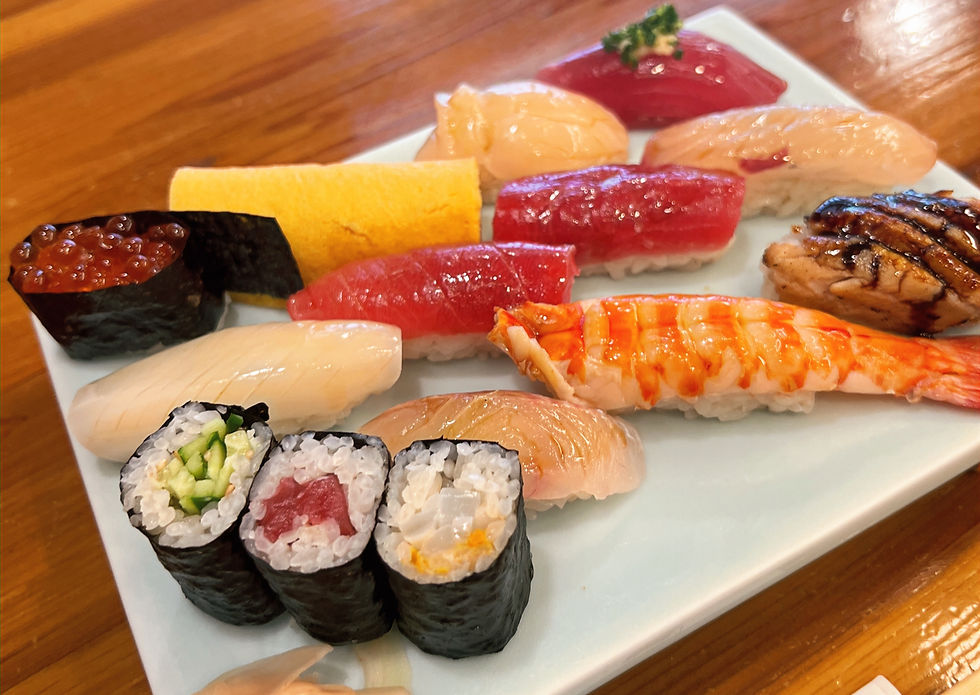
Nigirizushi (握り寿司)literally means “hand-formed sushi.” The sushi chef forms an oval-shaped ball by hand and tops it with a thin slice of fresh fish. In Japan, this is by far the most common form of sushi, you will see this much more than the rolled maki sushi, especially if you are eating at an upscale omakase restaurant.
There is often a small amount of wasabi between the rice and the fish, which adds an extra kick and contributes to the taste. At most sushi restaurants you can ask for your nigiri sushi with or without wasabi.
Temaki Sushi (Temakizushi)
Temaki sushi (手巻き寿司) is a type of hand-rolled sushi shaped like a cone, with a sheet of seaweed (nori) wrapped around the sushi rice and various fillings.

It’s a casual style popular at izakaya and family gatherings, where everyone assembles their own rolls with favorite ingredients.
Gunkan Maki
Gunkan Maki (軍艦巻き) or literally, battle ship roll, get's it's name due to it's resemblance to a battle ship, with a sushi rice formed by hand wrapped with a strip of seaweed and topped off with fish.

This style of sushi was invented in 1943 by Hisaji Imada, owner and chef of iconic Ginza sushi restaurant Kyubey. Imada invented the gunkan maki as an efficient way to serve newly popular toppings like ikura and uni.
Inari Sushi (Inarizushi)
Inari sushi is made by filling tofu pouches with sushi rice. It is a simple type of sushi that is easy to carry around. This makes inari sushi a popular choice for bento boxes and picnics.
This sushi is characterized by its sweet yet savory taste coming from the rice vinegar used to season the tofu pouches.
Oshizushi
Oshizushi is a type of pressed sushi made by pressing sushi rice and other ingredients, such as fish and vegetables, into a rectangular or square block using a wooden mold. This block is then cut into bite-sized pieces.
Pressed sushi originated in Osaka as a way to preserve fish. This style of sushi is an extremely popular item for ekiben, or specialty bento boxes that can be eaten on bullet trains or other long haul trains.
Chirashi Sushi (Chirashizushi)
Chirashi sushi means “scattered sushi” and consists of a bowl of vinegared rice topped with fresh ingredients such as fish, vegetables, and seaweed.

This method of sushi originated several hundred years ago, and it is believed that it was used to prevent food waste.
Sushi Etiquette
Okay, now you know all about the different types of sushi and sushi vocubulary. You're almost ready to go eat some sushi, but first we need to tell you a few things about etiquette. Here are a few tips to keep in mind:

In Japan, sushi is traditionally eaten with your hands, though chopsticks are perfectly acceptable. Nigiri is meant to be eaten in one bite. If you use soy sauce, flip the piece and dip the fish side lightly so the rice doesn’t fall apart. Add wasabi directly to the fish if you like, and eat pickled ginger (gari) between pieces to cleanse your palate.

While expectations differ at neighborhood sushi-ya and formal omakase counters, the fundamentals are the same. Follow these tips and you’ll navigate any setting comfortably with no awkwardness and side-eye from the chef.

Best places to eat Sushi
Now that we've covered etiquette, it's time to choose where to eat sushi. Here's where you can enjoy your favorite sushi dishes:
Conveyor belt (Kaiten-zushi)
If you want to enjoy sushi in an accessible way, then a kaiten-zushi restaurant is the place for you. You can take a seat at the conveyor belt and place your order via a tablet or simply grab something from the belt that catches your eye.
It's a fun dining experience to enjoy with friends, family, or even on your own. Some examples of kaiten-zushi restaurants are Kura Sushi, Kappa Sushi, and Sushiro.
An Omakase Experience
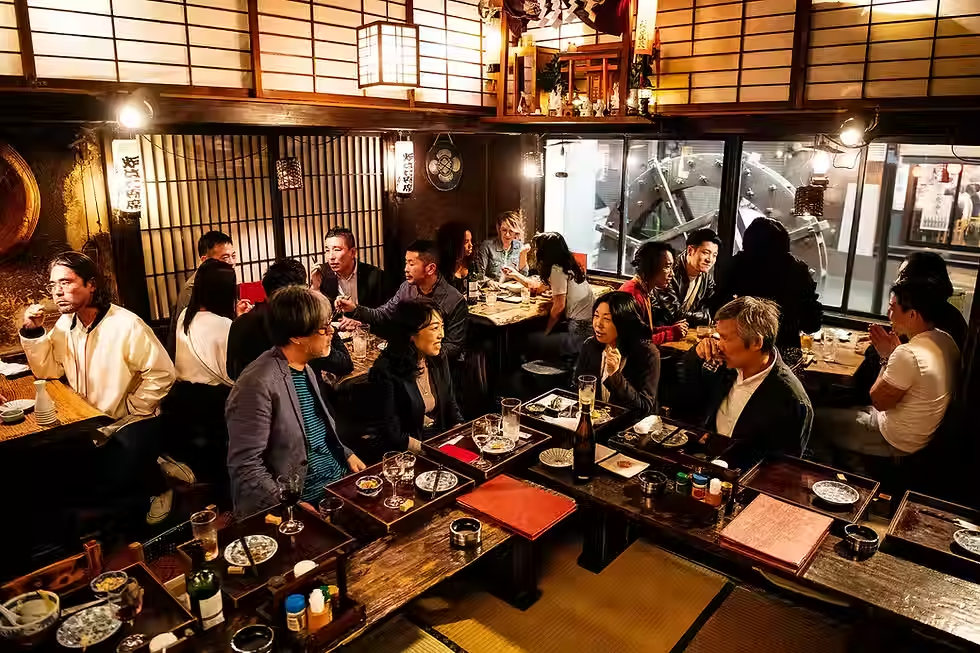
An omakase sushi experience is an intimate, tasting where you entrust the menu to the sushi chef. Courses are prepared and served one by one, often at the counter, with brief explanations of the ingredients and technique.

Because it’s a highly personal experience centered on seasonal seafood, it usually comes at a higher price point, but it’s well worth trying at least once.
Konbini
Even if you’re traveling on a tight schedule or getting back to your hotel late, konbini (convenience stores) make it easy to grab sushi on the go. It’s a quick, affordable, and surprisingly satisfying option for sushi. While it won’t rival a dedicated sushi restaurant, konbini sushi is surprisingly tasty!

Make it yourself
During your visit to Japan, make new memories with your family and friends by joining a Sushi Making Workshop.

Our workshop is led by a true sushi master at a Michelin-starred restaurant so you know you'll be in good hands.
Final Thoughts
Now you’ve been armed with the essentials in this beginner's guide to sushi: sushi history, the main sushi styles, and the most important sushi etiquette. Most of all, remember to enjoy yourself and keep an open mind when eating sushi in Japan. Your next favorite sushi could be the one you didn’t expect.