
Osaka Neighborhoods Beyond Umeda & Namba: Where to Walk and Eat
Osaka is often introduced through the same few areas — Umeda, Namba, and Shinsaibashi. But to really understand the city, you've simply got to explore Osaka neighborhoods beyond Umeda and Namba.

Step just a few minutes outside those hubs, and Osaka starts to feel different — more local, more grounded, and often more interesting. These are the neighborhoods where people settle into routines, return to the same shops, and eat without overthinking it.

Below are five areas that show a broader, more complete, even more fun version of Osaka — and why they’re worth your time. time.
⸻
Nakatsu
Creative, low-key, and quietly evolving
Just one stop from Umeda, Nakatsu feels like it exists slightly outside the city’s main current. Old wooden houses sit alongside minimalist cafés and small creative spaces, giving the area a calm, independent feel.

It’s not trying to impress anyone — which is why people end up lingering. You’ll find quiet coffee shops, low-key restaurants, and the kind of places that reward wandering without a plan.

Food here follows the same pattern. Nothing overly hyped, but a handful of genuinely good spots — small ramen shops, thoughtful cafés.

Why it matters:
Nakatsu shows a softer, more creative side of Osaka — a contrast to the city’s louder reputation.
⸻
Tenma & Tenjinbashisuji Shopping Street
Everyday Osaka, at full volume
If there’s one place that feels like the backbone of the city, it’s Tenma. Centered around Tenjinbashisuji — Japan’s longest shopping street — this area is dense, busy, and local.

Food here is a big part of the routine. Standing bars, casual eateries, and no-frills restaurants line the streets, filled with regulars who eat quickly, talk loudly, and come back the next day.
You’ll see everything from okonomiyaki and kushikatsu to simple grilled skewers and set meals. Not curated, not polished — just Osaka at its most natural.

Because of that density and everyday energy, this is where we focus one of our Osaka food tours. Think of it as way to experience how locals actually eat and move through the city 👉 [Osaka Takoyaki and Street Food Tour]
Why it matters:
Tenma shows how Osaka truly eats — casually, frequently, and without ceremony.
⸻
Taishō
Working-class, unfiltered, and rarely discussed
Taishō doesn’t appear on many itineraries, and it doesn’t try to. Historically tied to Osaka’s industrial and port-side economy, the neighborhood feels lived-in rather than designed.

There’s no central attraction pulling people in. Just residential streets, small shops, and a steady rhythm of daily life.

Food here isn’t defined by a single specialty. Instead, it’s a mix of small, local spots — takoyaki stands, casual diners, neighborhood eateries.

Why it matters:
Taishō grounds your understanding of Osaka. It’s a reminder that the city isn’t just about food scenes or nightlife — it’s a place where people live and work.
⸻
Fukushima
Calm, confident, and food-focused
Fukushima is where Osaka's food reputation holds up best. Just a short walk from Umeda, it feels noticeably more relaxed — but not in a sleepy way.

The restaurants here are built for repeat visits. Small counters, tightly run kitchens, menus that don’t try to do too much — just places that get things right. You don’t stumble into viral spots here. You end up at places people genuinely trust.

It’s also one of Osaka’s stronger ramen pockets. There are a ridiculous amount of high-level ramen shops in Fukushima!

Why it matters:
Fukushima shows a more mature side of Osaka — a neighborhood where food isn’t a spectacle, but something people take seriously.
Shinsekai
Nostalgic, chaotic, and impossible to ignore
Shinsekai doesn’t just lean into its retro image — it exaggerates it. Bright signs, bold flavors, and a theatrical nostalgia define the area, making it one of Osaka’s most recognizable neighborhoods.

It’s louder, more crowded, and more self-aware than the other neighborhoods on this list. Even if it’s no longer a hidden spot, walking through Shinsekai still gives important context for understanding Osaka’s personality.

Kushikatsu is the obvious draw — fried, sauced, and eaten quickly — but it’s also part of a broader culture here that leans into indulgence without apology.

Why it matters:
Shinsekai explains Osaka’s personality — playful and excessive.
⸻
Osaka Neighborhoods Beyond Umeda & Namba: Seeing Osaka as a whole
Osaka isn’t one vibe.
It’s the contrast between neighborhoods like Tenma and Taishō, or Nakatsu and Shinsekai, that makes the city interesting.

Understanding Osaka means walking these areas, noticing how people move through them, and eating where locals eat — not just where visitors are directed.
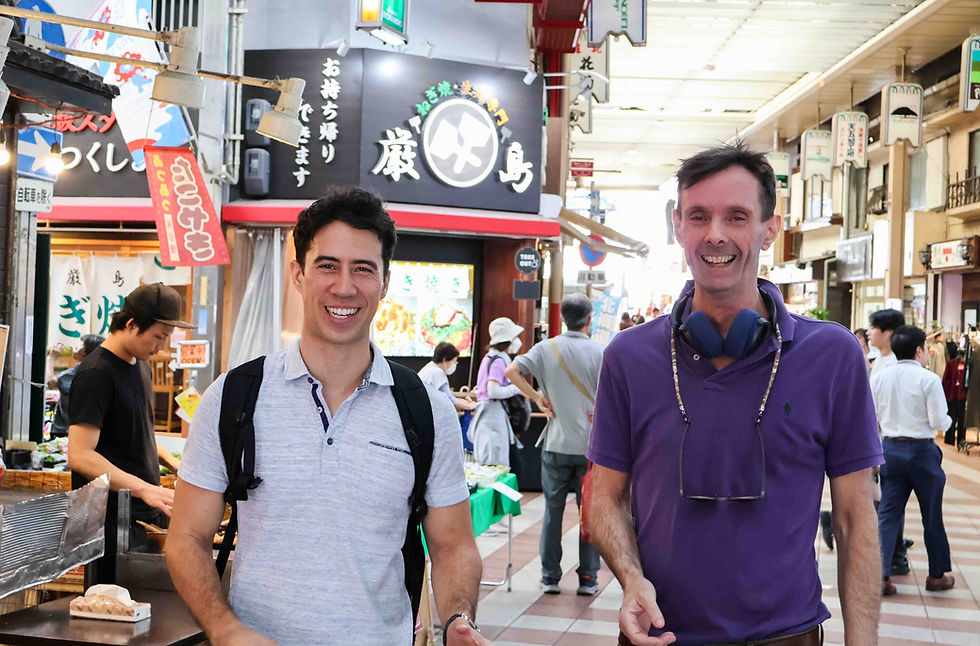
At Japan Food Travels, we plan trips around this idea. Whether through guided food tours or custom itinerary planning, we focus on neighborhoods first — helps travelers experience Osaka in a way that feels natural and local.


