
Exploring Yokohama’s Coffee Shop Culture: Three Historic Shops One Hour From Tokyo
Updated: May 20
In today’s fast-paced world, the charm of traditional spaces remains a rare and treasured find. One of Japan’s most delightful and historically rich offerings is the kissaten, a type of coffee shop that draws from the country’s deep-rooted cafe culture.
These establishments, often characterized by their cozy ambiance, vintage décor, and intimate setting, have been at the heart of Japanese coffee culture for over a century.

Unlike commercial coffee chains that emphasize convenience and speed, kissaten are all about slowing down, savoring both the coffee and the surroundings.
For those seeking to experience a piece of the past while enjoying a delicious cup of coffee, Yokohama, Japan’s vibrant port city, offers a collection of historic and beloved kissatens. These cafes don’t just serve coffee; they encapsulate a part of Japan’s history, from the era of Western influence to the city’s transformation as a cultural hub.
What is a Kissaten?
A kissaten (喫茶店) is a traditional Japanese cafe that first emerged in the early 20th century. Its origins can be traced back to the Taisho period (1912-1926), when Japan began to embrace Western-style cafes and coffee culture. The word “kissaten” combines “喫” (kitsu), meaning “to drink,” and “茶店” (saten), meaning “tea shop”; so it literally refers to a place where one can drink coffee or tea.

While the term “cafe” in the West often describes a space that serves food as well as drinks, the kissaten traditionally focuses more on coffee and tea, with some light meals like sandwiches and pastries on offer.
Historically, kissaten played an important role as meeting spots for intellectuals, artists, and other members of society. In a way, they were spaces for both relaxation and connection, as well as for the exchange of ideas. The atmosphere of a kissaten tends to be cozy, with vintage furniture, low lighting, and sometimes even jazz music in the background. These cafes offered a slower pace of life where visitors could enjoy a cup of coffee without the rush often found in modern cafes. Today, many kissaten continue to offer a respite from the hectic rhythm of daily life.
Cafe Kojima-ya: The Legacy of Yokohama’s Oldest Kissaten
Our journey begins at Cafe Kojima-ya (珈琲専科 小島屋), one of Yokohama’s oldest and most iconic kissaten. Nestled near the city’s famous Chinatown, this cafe has been serving coffee since 1948 and has become an institution for both locals and visitors alike.

Like many kissaten of its era, Kojima-ya was founded during a time of great social and cultural change in Japan. Following the devastation of World War II, Japan began to rebuild, and Western influence began seeping into everyday life. Coffee, once a rare and exotic drink, became increasingly popular, and the idea of Western-style cafes spread across the country. Kojima-ya was one of the first to offer specialty coffee, helping popularize the act of drinking coffee as part of daily life.

The cafe still takes great care in how it brews its coffee, sticking to traditional hand-brewing methods that emphasize quality over speed. The interior of Kojima-ya is a snapshot of mid-century Japan, with dark wood paneling, vintage furniture, and soft, inviting lighting. Stepping inside feels like entering a time capsule, a place where the clock seems to slow down. It’s a charming reminder of an earlier, simpler time.

Beyond its dedication to coffee, Kojima-ya is also a reflection of Yokohama’s history as a port city. As one of Japan’s main gateways to the West, Yokohama has long been a place where foreign cultures intersect with Japanese traditions. The cafe's enduring presence is a symbol of this cultural exchange and a living testament to the city’s post-war history.
Lumière de Paris: A Taste of Parisian Elegance
Next on our list is Lumière de Paris (コーヒーの大学院 ルミエール·ド·パリ), a cafe that brings the elegance and sophistication of Parisian cafe culture to Yokohama. Established in 1977, this kissaten offers a distinctly European experience, drawing on the intellectual and artistic vibe of Parisian cafes from the early 20th century.

The name “Lumière de Paris,” which translates to “Light of Paris,” perfectly captures the atmosphere of the cafe, designed to evoke the classic charm of the French capital. Parisian cafes have long been seen as gathering places for intellectuals, writers, and artists, a space for deep conversation and inspiration. Lumière de Paris carries on this tradition, providing an environment where creativity can flourish.

The cafe's interior is a blend of French style and the traditional Japanese kissaten feel, with polished wood furniture, soft lighting, and a cozy, intimate atmosphere. It’s a space where visitors can truly lose themselves, whether they’re reading, writing, or simply enjoying a quiet moment over coffee.

What makes Lumière de Paris stand out is its dedication to the arts. The cafe frequently hosts exhibitions, showcasing photography, painting, and music. This emphasis on culture and creativity has made it a popular gathering spot for Yokohama’s artistic community. Here, coffee is not just about the drink; it’s about fostering a space where ideas can be exchanged, and inspiration can be found in every corner.
Bashamichi Jyubankan: The Quintessential Yokohama Experience
Our final stop is Bashamichi Jyubankan (馬車道十番館), located in the historic Bashamichi district, a neighborhood that was once the heart of Yokohama’s Western-style development. Established in 1974, this kissaten occupies a building that dates back to the early Meiji period (1868–1912), making it not only a cafe but also a piece of architectural history.

The cafe’s location is key to its significance. Bashamichi was known as the “Champs-Élysées of Yokohama” during the late 19th century, due to the large number of Western-style buildings and businesses that lined its streets. Bashamichi Jyubankan sits right in the middle of this historically rich area, offering visitors a unique opportunity to experience the intersection of Western and Japanese culture that shaped modern Yokohama.

Inside, Bashamichi Jyubankan offers an atmosphere that blends Western and Japanese design elements, from its detailed woodwork to its vintage furnishings. The cafe's décor, combined with the calming sounds of classical music, creates a timeless experience. It’s a place where you can feel the weight of history with every sip of coffee, making it more than just a cafe, but a living museum of Yokohama’s cultural evolution.

For many, visiting Bashamichi Jyubankan is a way to connect with the rich history of Yokohama as a port city and as a site of cultural exchange between Japan and the West. It’s a place where history, architecture, and coffee come together, offering a truly unique experience.
Conclusion to Three Historic Coffee Shops in Yokohama:
Yokohama’s kissaten, like Cafe Kojima-ya, Lumière de Paris, and Bashamichi Jyubankan, are more than just places to enjoy coffee; they are cultural treasures that offer a glimpse into Japan’s past. Each of these cafes tells a different story of how Western influences merged with Japanese traditions, creating something unique in the world of coffee culture.
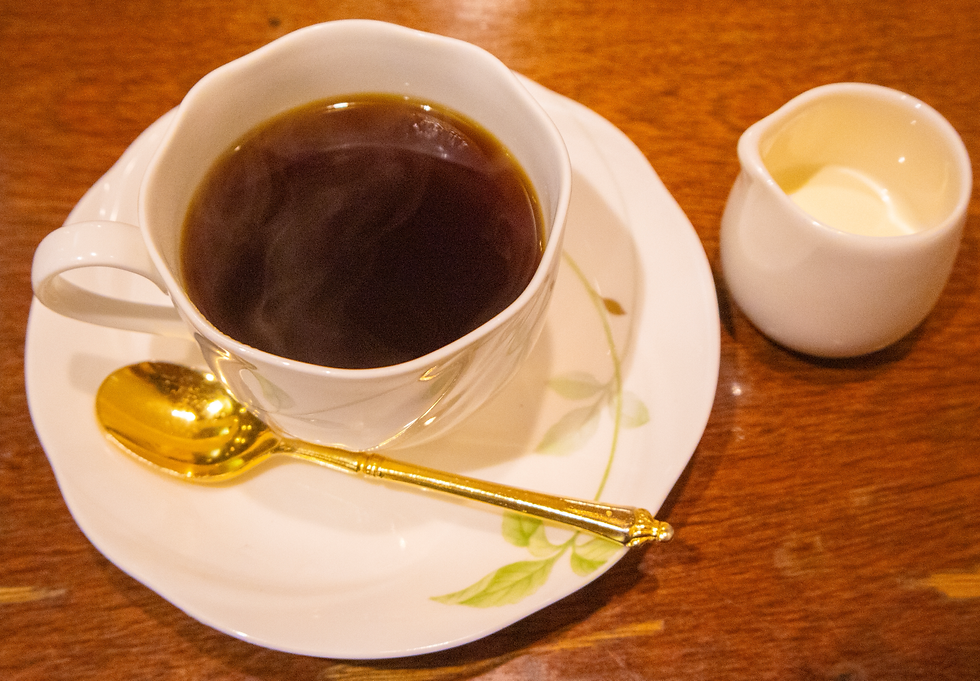
Despite the rapid pace of modern life, these historic kissaten remain places where time seems to slow down. Whether you’re a history enthusiast, a coffee lover, or simply someone looking for a quiet space to relax, these cafes offer an authentic, nostalgic experience that connects you with the past. Visiting them is not just about having a cup of coffee; it’s about stepping into a piece of history and experiencing Yokohama in a way that few other places can offer.


