
How to Plan a Food Trip to Japan (Without the Overwhelm)
Planning a food trip to Japan is one of the more exciting things you can do as a traveler — and one of the more daunting. The depth of the food culture, the sheer number of options, and the research required to do it well can turn anticipation into paralysis fast.

This guide is designed to cut through that. Whether you’re mapping out your own itinerary or figuring out where expert guidance might save you time and headaches, here’s how to approach it.
Japan Food Trip - Know what each city is actually good for
Most first-time visitors to Japan are already locked into the big three: Tokyo, Kyoto, and Osaka. That’s the right call — each city has a distinct food identity worth understanding before you arrive.

Tokyo is the anchor. More Michelin stars than anywhere else on earth, but also an extraordinary depth of ramen shops, standing sushi bars, izakayas, and market food. It can absorb five or six days of serious eating without repeating itself.

Kyoto leans refined — this is where kaiseki cuisine was codified, and the food reflects a city that has been thinking about aesthetics for centuries. Osaka is the counterpoint: louder, more casual, built around street food and a civic pride in eating well. The locals will tell you the food is better than Tokyo. They’re not entirely wrong.

If your itinerary has flexibility beyond the big three, the regional food culture outside these cities is genuinely worth exploring — fresh seafood on the Japan Sea coast, ramen traditions that vary city by city, local produce that rarely travels far. But that’s a longer conversation. For a first trip, understanding what Tokyo, Kyoto, and Osaka each offer on their own terms is the right place to start.
Figure out what actually needs to be booked in advance
This is where a lot of people either over-plan or get caught out. Not everything in Japan requires a reservation — but some things genuinely do, and the consequences of missing them aren’t just disappointment, they’re wasted days.

The places that need serious advance planning are the obvious high-end ones: Michelin-starred omakase counters, multi-course kaiseki restaurants, and any experience with a waiting list measured in months. Some of these are legitimately extraordinary and worth the effort. Others have inflated reputations held up largely by their exclusivity. Know which is which before you commit a morning to the booking process.

Instagram-famous spots are a separate category. Some popular food destinations — the really photogenic ones — now accept reservations specifically because demand got out of hand. Worth checking before you assume you can walk in. But be realistic: if a place is famous primarily because it photographs well, the food may or may not match the hype.

The places you don’t need to plan? More than you’d think. Japan’s food quality is so consistently high that some of the best meals you’ll have will be at a ramen counter you wandered into, a market stall you passed by chance, or a basement izakaya with no English menu. Build time for that. Some of the most memorable eating in Japan happens when you’re not following a list.
Don’t let the hype spots run your itinerary
If you build your trip entirely around the most talked-about, most photographed restaurants in Japan, you’ll spend a lot of time waiting, planning, and chasing — and you’ll miss the texture of what makes Japanese food culture so special.

The hype places exist on a spectrum. Some are genuinely exceptional and worth the effort. Some are excellent restaurants that happen to also be famous. And some are riding a wave that has little to do with what’s on the plate. The problem is that from the outside, they all look the same.

The deeper you go — the more you eat at local lunch spots, neighborhood specialists, places that have been doing one thing well for thirty years with no social media presence — the better your trip gets. That’s not contrarianism. It’s just how Japan works.
Where a guided food experience changes the equation
Here’s the honest case for going with someone who knows the ground: eating really well in Japan — not just at the famous places, but at the right places — takes significant time and local knowledge. Language is a real barrier at many of the best spots.

Reservations at top-tier restaurants often require a Japanese phone number or a contact with an existing relationship. And knowing which neighborhood to be in, on which night, for what kind of experience, isn’t something a guidebook can reliably tell you.

At Japan Food Travels, we build multi-day food itineraries for people who want to eat exceptionally well without spending weeks doing the research themselves. That means curated food tours in Tokyo and across Japan — not the influencer circuit, but the places our guides actually eat, the hidden spots that don’t need a PR strategy because the food speaks for itself. We handle the bookings, the logistics, the transportation, and the hotels, so the trip is about eating rather than coordinating.

If you’re coming to Japan with a serious interest in food and the flexibility to spend time doing it right, that’s exactly who we do this for.
A few practical things worth knowing
Carry cash. Japan is still largely cash-based, and some of the best small restaurants don’t take cards.
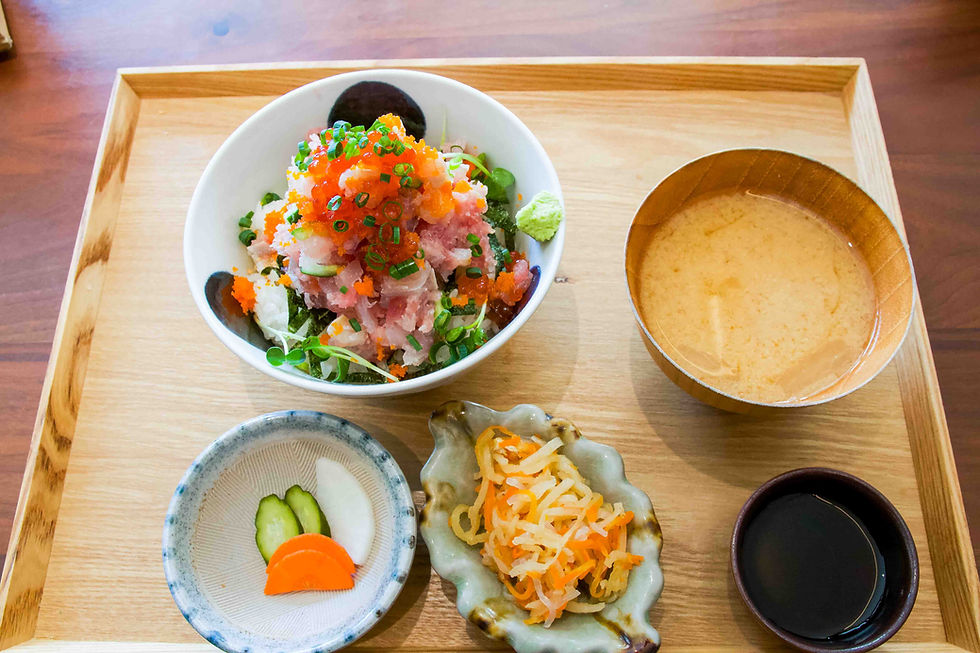
Eat lunch. Lunch at high-end restaurants is often a fraction of the dinner price, frequently from the same kitchen. Some of the best value eating in Japan happens between noon and two.

Don’t skip convenience stores. This sounds like a joke. It isn’t. 7-Eleven, Lawson, and FamilyMart in Japan sell food that would pass for decent café fare in most Western cities. As a backup meal or a morning option, they’re genuinely good.

Japan will feed you well almost regardless of what you do. The question is whether you want to eat well, or eat exceptionally — and that gap is mostly a function of preparation, local knowledge, and time. Come with the right framework, and this trip will stay with you.


