
Hidden Eats Around Takeshita Street: Savory Japanese Restaurants in Harajuku
Takeshita Street is one of Tokyo's most recognizable shopping streets, known for its colorful fashion, trendy shops, cafes, and huge variety of sweets and snacks.

But beyond the busiest storefronts, the surrounding streets and buildings are home to plenty of Japanese restaurants that are easy to overlook.
A Brief History of Takeshita Street
Takeshita Street became closely associated with Harajuku's youth culture in the 1970s, as boutiques, cafes, and specialty shops began drawing young people to the neighborhood. Fashion magazines helped turn Harajuku into a national trendsetter, and the area soon became known for its distinctive street fashion.

In 1978, Laforet Harajuku, a large fashion and shopping complex near the end of Takeshita Street, opened and became an important part of Harajuku's growing fashion scene. The following decade brought the famous Takenoko zoku, groups of young people who gathered around Harajuku in elaborate outfits and danced to music along the streets.

Food became part of the area's identity too. Crepes, in particular, became closely associated with Harajuku from the 1970s onward, helping establish Takeshita Street as a place where food and youth culture went hand in hand.

That reputation remains today, but Takeshita's food scene extends well beyond the colorful snack shops lining the main street! Tucked into basements, side streets, and modern shopping complexes are restaurants serving everything from handmade onigiri and gyoza to traditional tempura and Hokkaido-style soup curry.
Here are five worth looking for.
Onigiri Harajuku Sanchome Tallulah | おにぎり 原宿三丁目 たるら
Opened in 2025, Onigiri Harajuku Sanchome Tallulah is tucked a short walk from Harajuku Station, away from the busiest stretch of Takeshita Street. The small restaurant is one of the area's newer additions, but it has an interesting connection to Akita Prefecture.

The husband and wife owners opened the shop as their first restaurant, and the rice used for its onigiri comes from an organic farm in Akita. The shop uses Akitakomachi rice grown by the farm, connecting this little Harajuku restaurant with rice production in northern Japan.

The onigiri are shaped by hand, with a selection ranging from familiar fillings to more unusual options. There are also dishes such as dashimaki tamago, karaage, and miso soup, with sets that pair two onigiri with side dishes for a more substantial meal.

It is a good example of the kind of place that can disappear from view when most of your attention is on the colorful storefronts along Takeshita Street.
Takenoshita SOBA | 竹ノ下そば
Takenoshita SOBA is another easy one to miss, with the restaurant located in a basement just off Takeshita Street. From the main shopping area, there is little to suggest that a traditional soba restaurant is tucked downstairs.

The restaurant opened in 2023, but its story goes back further through its owner. Before opening Takenoshita SOBA, he operated another soba restaurant, Soba ni Sake no Ae, which received Michelin Bib Gourmand recognition for four consecutive years beginning in 2014.

The menu centers on soba, with tempura, vegetables, and sake also available. Vegan dishes are offered as well (reservations required). The restaurant's setting makes it feel removed from the crowds despite being close to the heart of Harajuku.

For a meal built around a traditional Japanese staple, it is a surprisingly quiet detour from one of Tokyo's busiest shopping streets.
Harajuku Gyozarou | 原宿餃子樓
Harajuku Gyozarou takes a more focused approach, building its menu around gyoza rather than trying to cover a long list of dishes. It sits on a quieter street near Meiji Jingumae Station, just outside the busiest flow of Takeshita Street.

The main attraction is the gyoza, available both grilled and boiled, with a few variations and simple side dishes to round out the meal. The restaurant has also been included in Tabelog's Gyoza 100 selection, a recurring list highlighting notable gyoza restaurants in Japan.

The straightforward menu is part of its appeal. This is a place to stop specifically for gyoza rather than a restaurant where the specialty gets lost among dozens of choices.

Its location adds to the contrast, putting a long-running neighborhood-style gyoza restaurant only a short distance from Harajuku's most crowded shopping streets.
Tempura Hisago Harajuku Quest | 天ぷらひさご 原宿クエスト店
Tempura Hisago Harajuku Quest is one of the newest restaurants on this list, but the restaurant behind it has a history stretching back more than a century. The Harajuku location opened in January 2026 inside Harajuku Quest, a large shopping complex near the end of Takeshita Street.

Hisago was originally established in Hibiya in 1918, during the Taisho era. The Harajuku restaurant is the fourth location in the group, bringing that long-running tempura tradition into one of Tokyo's most modern retail districts.
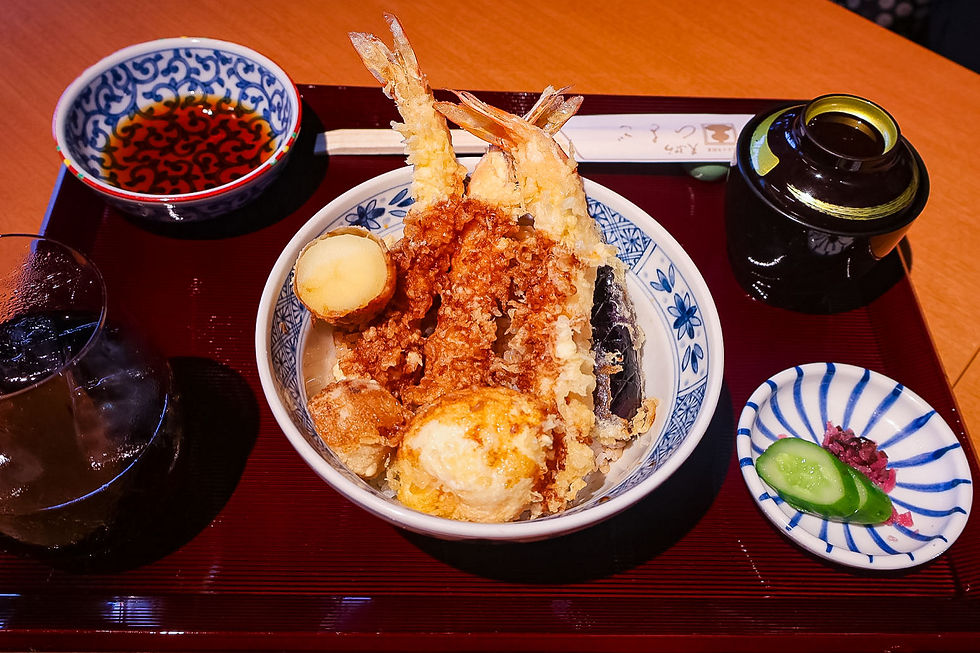
The menu focuses on Edo-style tempura, with tempura set meals, tendon, and courses. Counter seating gives diners a view of the cooking, while tables and semi-private seating are also available.

The setting makes this one particularly interesting: a restaurant with roots in early 20th-century Tokyo now operating inside a modern Harajuku shopping complex.
Rojiura Curry SAMURAI Harajuku | 路地裏カリィ侍. 原宿店
Rojiura Curry Samurai Harajuku brings a completely different regional specialty to the area: Hokkaido-style soup curry. The Harajuku restaurant opened in 2023, but the story began much farther north.

The original Rojiura Curry Samurai opened in a small back alley in Sapporo in 2007, with just 14 seats. Its concept centered on soup curry with an emphasis on vegetables, and the small restaurant eventually grew into a few spots across Japan.
The Hokkaido connection remains important to the restaurant. The founder's family operates a farm in Shibetsu, Hokkaido, and the restaurant has maintained relationships with producers while sourcing ingredients from them.
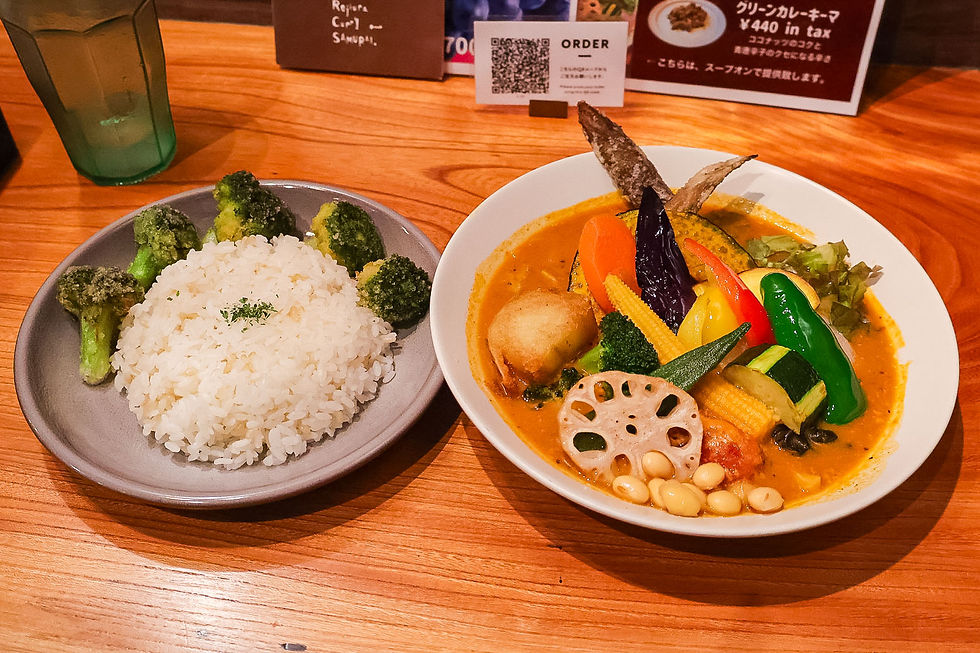
In Harajuku, that regional food tradition sits among fashion stores, cafes, and the crowds of Takeshita Street. It is a great example of how the neighborhood's food scene extends beyond the dishes most closely associated with central Tokyo.
Want to discover more hidden gems across Tokyo? Join us for a Full Day Food Tour and explore some of our favorite local spots.
Wrapping Up: Frequently Asked Questions
Is Takeshita Street worth visiting for food?
Definitely! Takeshita Street is famous for its sweets and snacks, but there's more to eat if you know where to look. The surrounding area has some great Japanese restaurants that are easy to overlook when you're caught up in the crowds.
Are there restaurants near Takeshita Street that aren't just cafes and dessert shops?
Absolutely. Just a short walk from the main street, you'll find everything from small onigiri shops to traditional tempura restaurants. It's worth wandering a little farther to see what else the neighborhood has to offer.
What makes Harajuku's food scene worth exploring?
One of the fun things about eating in Harajuku is the variety. Alongside the trendy sweets and street food, you can find regional specialties from other parts of Japan and long-established Japanese dishes in some unexpected places.
A Different Side of Takeshita Street
Takeshita Street may be famous for its sweets and shopping, but there is plenty more to discover just beyond the main crowds! From tiny onigiri shops to century-old tempura, these spots add a little more depth to a walk through Harajuku, and some are hiding closer than you might expect.


